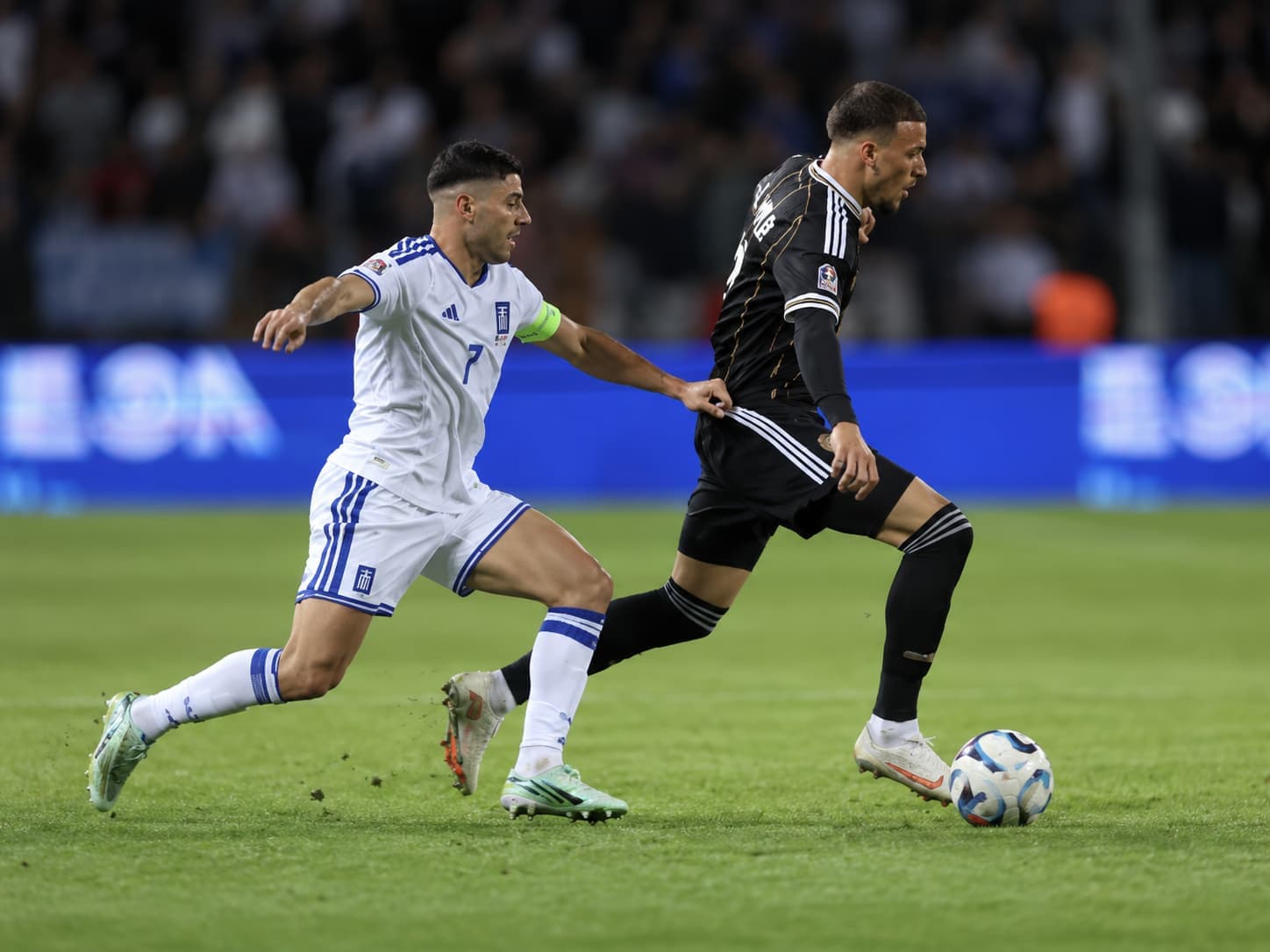
The Aegean Impasse: How Jovanović’s Defensive Monolith Subdued Klopp’s Fluidity
Tactical Retrenchment: Greece's Blueprint for Neutralizing German Dynamism
When Jürgen Klopp’s Germany dismantled Serbia with a 4.05 xG blitz in Munich on Thursday, the prevailing consensus was that Die Mannschaft had solved their early-tenure teething issues. Yet Sunday’s return fixture in Thessaloniki demonstrated that breaking down an aggressive, transitional opponent is an entirely different tactical puzzle than dismantling an ultra-disciplined low block designed by Ivan Jovanović. Across 180 minutes of Nations League football over seven days, Greece did not merely contain Germany; they systematically dismantled their offensive identity.
Jovanović’s 5-4-1 defensive structure functioned with clockwork synergy. Aware that Germany’s primary creative engine operates through Florian Wirtz in the inside-left channel, Greece deployed center-back Konstantinos Mavropanos to step aggressively into the half-space whenever Wirtz dropped deep to receive. By denying Wirtz the freedom to turn on the half-turn, Greece forced German circulation backward into Aleksandar Pavlović and Waldemar Anton. When Germany did manage to breach the lines—most notably Jonathan Burkardt’s 32nd-minute strike that was chalked off by VAR for a marginal offside in the build-up—Greece never panicked, recalibrating their defensive lines with immediate spatial discipline.
The Sterile Trap: Why Peripheral Possession Failed to Generate Central Chaos
Statistically, Germany’s 68% possession and territorial occupation suggested control, but the underlying shot quality told an entirely different story. Unlike their dynamic vertical combinations against Serbia, Germany’s attacking play degenerated into predictable horseshoe circulation around Greece's defensive perimeter.
With Nick Woltemade and Burkardt frequently isolated between Mavropanos and Konstantinos Koulierakis, Germany generated few genuine second-phase overloads. Left-back David Raum delivered a barrage of crosses into the penalty area, but against an aerial wall anchored by Mavropanos and protected by goalkeeper Konstantinos Tzolakis, floated aerial deliveries played directly into Greek strengths. As the second half wore on and fatigue set in across the pitch, Klopp’s late introductions failed to inject the tempo required to disrupt a team defending their national standing with supreme collective commitment.
Contrasting Weekend Landscapes: Rijeka’s Ruthless Blitz vs. Thessaloniki’s Grinding War
Germany’s frustrating scoreless stalemate stands in stark, illuminating contrast to the events documented in yesterday’s dispatch from Rijeka, where Thomas Tuchel’s England decimated Croatia 7-0. Both international heavyweights were tasked with navigating hostile away environments during this grueling autumn window, yet their offensive executions could not have differed more radically.
Where England ruthlessly exploited an aging, defensively porous Croatian backline by maintaining extreme touchline width and converting transition turnovers into instant four-on-three overloads, Germany ran headfirst into an impenetrable wall that offered zero transition seams. England’s attackers enjoyed acres of green grass behind Joško Gvardiol and Josip Šutalo; Germany, by contrast, operated in telephone booths against a Greek side that refused to commit numbers forward. While England left the Balkans riding a historic wave of momentum, Germany depart Greece facing an uphill battle in Group A2, trailing the Greeks by three points and needing a flawless November window to rescue their Nations League campaign.
Tactical Takeaway: Unlocking Deep Blocks via Third-Man Underlaps Over Blind Aerial Crossing
Germany’s struggles in Thessaloniki offer modern coaches an essential case study in the perils of predictable wide deliveries against three-center-back systems. When an opposing defense possesses superior height and box-marking concentration, high floated crosses from wide full-backs are the least efficient method of chance creation.
To unlock deep 5-4-1 structures, the attacking team must create "blindside chaos" inside the penalty area through third-man underlapping runs rather than overlapping crosses. When Raum or Treu advanced out wide, Germany needed their central attacking midfielders to make dynamic forward runs between the wing-back and outside center-back, dragging the defensive line toward the byline before cutting back along the ground to the penalty spot. Floating crosses into a crowded six-yard box allows elite defensive stoppers like Mavropanos and Koulierakis to head balls clear facing play. Only by forcing center-backs to turn toward their own goal through low cutbacks and interior penetration can teams consistently disrupt an entrenched tournament low block.






Comments